
Designing from identity, not industry
GUEST BLOG SERIES — 01
B-DIVINE IN CONVERSATION WITH:
Safa El Samad, Artist & Designer
Dukkana, Melbourne, VIC
On Lebanese heritage, collaboration, and conscious creative practice.
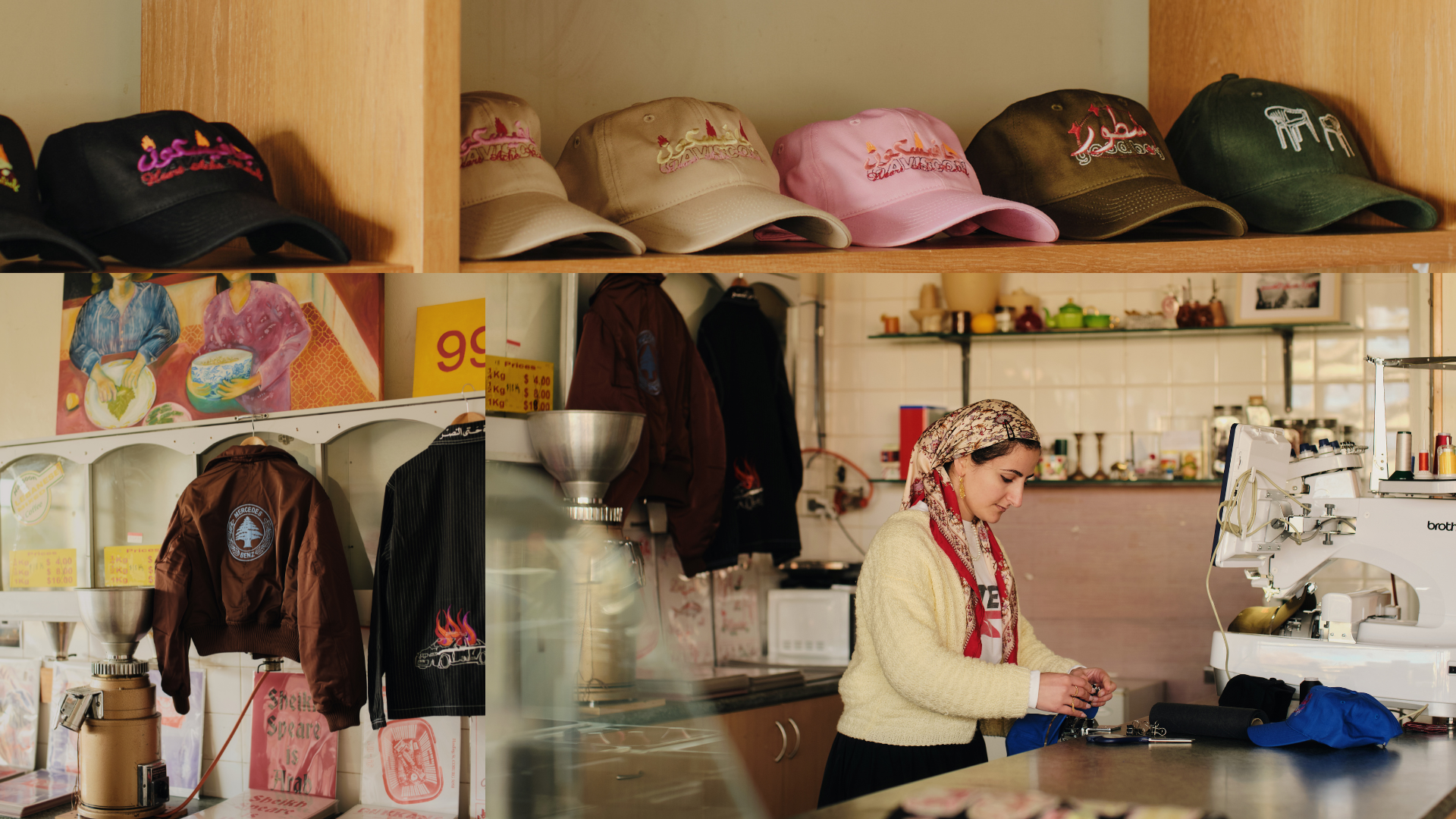
I run my brand ‘Soof’ from my father’s old grocery store in Coburg (Melbourne), where people are invited to bring in old or unloved garments for repair and revitalisation. The work focuses on giving clothes a longer life and building a sense of connection to pieces that already exist. Community and collaboration sit at the centre of what I do, and I often work with other creatives on projects that speak to Palestine and its ongoing struggle.
[1] Can you share a little bit about yourself and your background?
I am Safa, a second-generation Lebanese settler on Wurundjeri land. I grew up in Melbourne’s western suburbs as one of six siblings, and that environment shaped the way I think about making, sharing, and working with others. My practice moves between fashion, textiles, and architecture, and I’m especially drawn to upcycling garments and objects that would otherwise end up in landfill.
[2] What are your current creative focuses and projects?
Lately, I’ve been drawn to world-building and brand identity work, as I struggle to focus on just one part of the design process. When I’m developing a new embroidery flash series, for example, I don’t only want to make the designs — I want to shape the marketing, build the website, and plan the visual merchandising as well.
A recent project for a Lebanese bakery in LA, Hayet Albi, showed me how easily the work can expand. It began as a simple logo brief, but it quickly grew to include everything from wax paper inserts, to the menus, and even uniforms. Some of those additions were requested, but others came from my own momentum; in the end, the deadline was the only thing that made me stop. Without it, I would have kept refining and adding more.
[3] You heavily tie in your Lebanese heritage and culture into your art. What does the interplay of culture and creativity mean to you? Does identity play a role in this at all? If so, how?
For me, culture isn’t something I consciously “add” to my work; it’s the lens I see through. My Lebanese heritage shapes the way I notice things, the stories I’m drawn to, the colours, the humour, the references — all of it. So the interplay between culture and creativity feels natural rather than deliberate. Growing up in a big Lebanese family, identity was always something that carries into my practice. I’m drawn to materials, images and memories that feel familiar, and I use them to build worlds that hold both personal and collective histories. In that sense, identity does play a role, but it’s not about defining myself. It’s about honouring where I come from while giving space to imagine something new.
[4] What's one piece of advice you can give someone starting their creative journey?
Pursue your creative journey because you believe in it, not because it’s what people are telling you should do or because you think it’ll make a lot of money. When you create with intent it is felt by those who observe it and makes a world of difference. Sometimes I need to be reminded of why I started Soof and what it means to me and that keeps me grounded. I was recently given advice to make sure to do a Black Friday sale because that is a way a lot of businesses make most of their yearly income. But that is so diametrically opposed to the slow, thoughtfulness of Soof.
[5] Dukanna has become a community hub for SWANA and fellow BIPOC friends in Melbourne. What inspired the formation of this space?
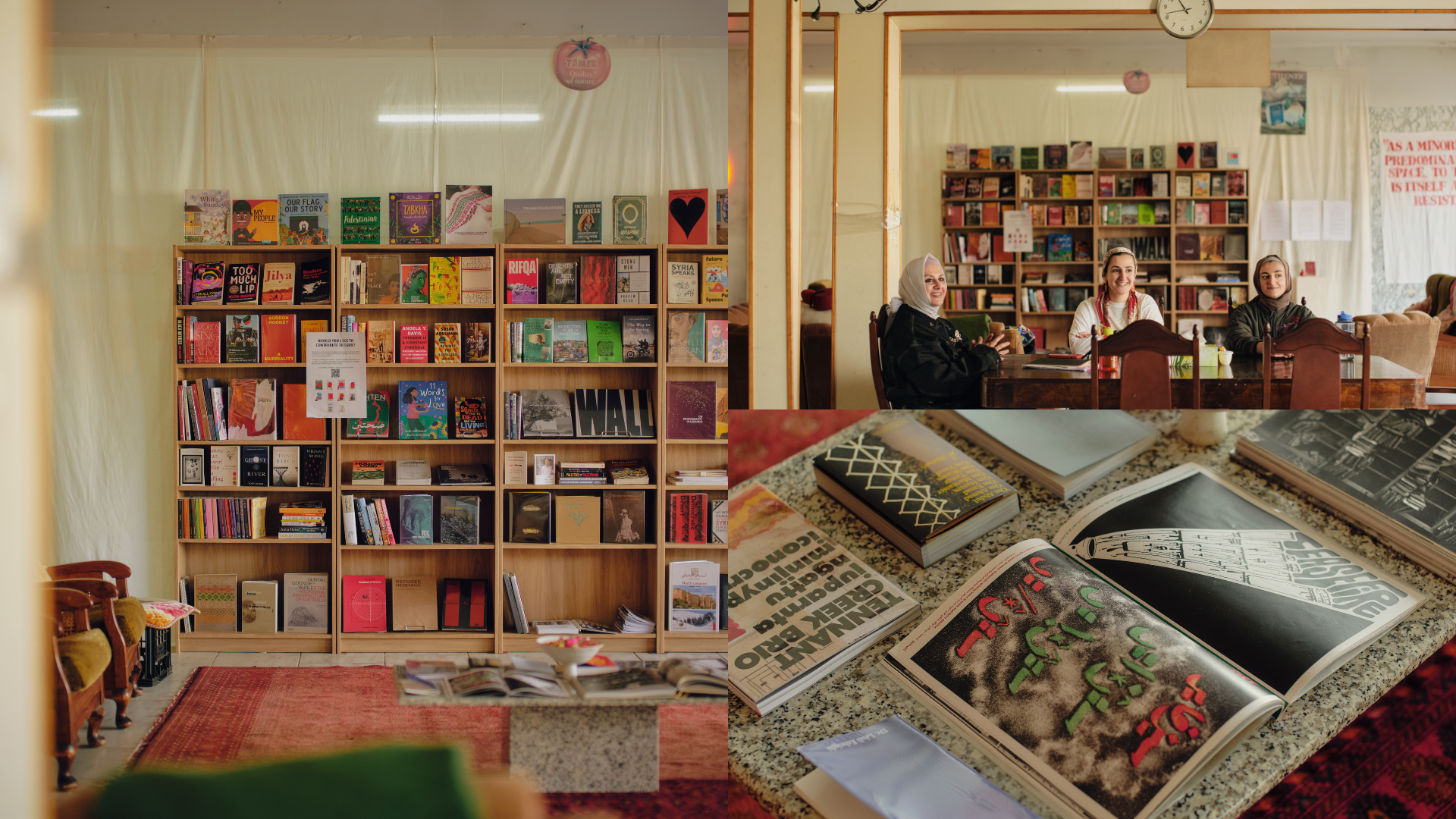
My younger sister Fatima is the brains behind Dukkana. She completed a master’s in urban planning and has held an interest in third spaces, especially for BIPOC. Together, we wanted to create a space where people could come and experiment or just do nothing, without feeling out of place or like they needed to spend money to be present. We were on a hunt for a new space bigger than our small studio at the time, and were blessed with the opportunity to use our dad’s vacant shop. The space is large and something we could never afford on our own, so we feel it’s our duty to pass this blessing onto the community.
[6] What’s been your favourite project or piece you’ve worked on and why?
One of my favourite projects was a piece I created at uni, titled ‘Textiles in Gaza’.It allowed me to combine both my disciplines in fashion and architecture, and let me explore embroidery as a medium using architectural drawing techniques.
The work focused on the material traditions of Gaza and how textiles carry memory, labour and resistance. It allowed me to speak directly to the ongoing atrocities in Palestine.
Learn more about Safa:
https://www.instagram.com/safaelsamad/
https://soofflash.com/